
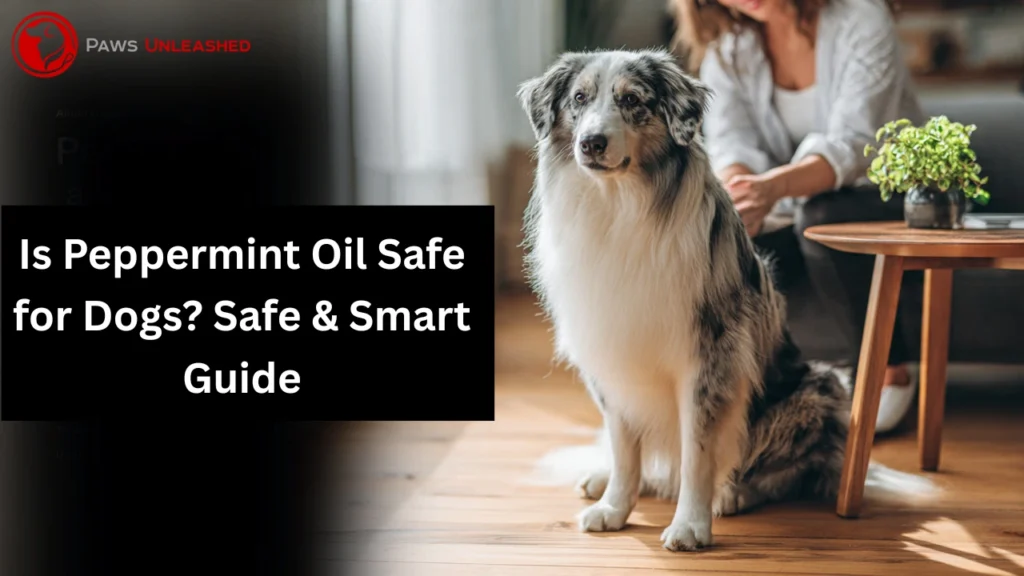
Is Peppermint Oil Safe for Dogs? Safe & Smart Guide
Essential oils have gained popularity in households as an aromatherapy and a natural cleaning and holistic health product. Peppermint oil is the most popular among them with its cooling and fresh scent. However, a vital and sometimes pressing question is whether is peppermint oil safe for dogs?.
The concise and responsible response is that peppermint oil is not entirely safe to dogs, particularly in its concentrated or undiluted form. Some of the pet-safe products do include highly diluted peppermint derivatives, but pure essential oil can also be dangerous to a dog, depending on its exposure.
In this ultimate guide, we shall analyze the science of peppermint oil, its effects on dogs, whether peppermint essential oil can be safe to dogs, whether peppermint essential oil is safe for dogs, whether diluted peppermint oil is safe for dogs to smell. The article is structured in such a way that is easy to understand and follows the advice of a veterinarian in order to make a well-informed decision regarding the health of your pet. That’s why PawsUnleashedUSA dog training and boarding centre in Florida is Convenient, because they take care of every thing.
Table of Contents
Understanding Peppermint Oil and How It Works
The peppermint plant (Mentha piperita) is a cross between watermint and spearmint that yields peppermint oil. The oil is distilled by steam of the leaves of the plant, and contains some concentrated chemical constituents, chiefly menthol and menthone.
The cooling effect and the strong odor of peppermint can be attributed to menthol. Although this can be very very soothing to the humans the concentration of essential oils is much higher than the concentrations which are produced naturally in peppermint leaves.
Dogs do not metabolize some plant substances in the same way as humans. Their liver enzymes, breathing systems and smell sense predispose them to potent essential oils. What smells fresh and mild to us may nauseate a dogs system.
That is why the nature, dosage and route of exposure are highly important in the inquiry, is peppermint oil safe for dogs?
Is Peppermint Oil Safe for Dogs?
Safety of peppermint oil is determined by a number of factors:
- Whether it is pure essential oil or is a component of a pet-formulated product.
- It can be diluted or undiluted.
- Exposure route (inhalation, skin contact, ingestion) of the dog.
- Age, size, breed and medical history of the dog.
- Generally, peppermint oil (in its undiluted form) is not safe in dogs. There are adverse reactions like inhalation of strong vapors, topical application or accidental ingestion.
There is a general consensus among veterinary professionals that pet owners should not use essential oils of a concentrated form in the vicinity of dogs, unless the product is generally approved of veterinary use.
Is Peppermint Essential Oil Safe for Dogs?
When one poses the question of whether is peppermint essential oil safe for dogs, they are more likely referring to the pure and highly concentrated oil that is sold as an aromatherapy or home use product.
Pure essential oil is much stronger than the peppermint extract in pet treats or dental products. Due to its strength, it may cause irritation of the skin, mucous membranes and respiratory tract of a dog. It can also be stressful to the liver in certain instances when consumed.
Dogs in contact with peppermint essential oil can experience:
- Gastrointestinal upset
- Drooling
- Vomiting
- Lethargy
- Skin redness or irritation
- Respiratory discomfort
Small dogs, puppies, old dogs, and puppies with prior liver or respiratory diseases are at greater risk.
Due to these reasons, it is not usually advisable to use peppermint essential oil in the pure form near dogs without veterinary care.
How Dogs React to Smell: Why Inhalation Matters
Dogs possess an unbelievable ability to smell as they are estimated to be tens of thousands times more sensitive than humans. Their nasal cavities are shaped in a way that makes them sensitive to the slightest smells, so powerful vapours of essential oils are overwhelming.
When you spray peppermint oil in your house, your dog will react in a way you are not anticipating. Dogs might either avoid the place or display irritation.
This leads to a frequently raised issue, is peppermint oil safe for dogs to smell?
Exposure to the strong vapors of peppermint oil may irritate the respiratory system of a dog. Symptoms of discomfort can be coughing, sneezing, watershed, or restlessness. Asthma-like dogs or brachycephalic breeds (Bulldogs and Pugs, etc.) may be more susceptible.
Although short-term and limited exposure in a well-ventilated space may not be harmful in all situations, it is not regarded as being completely safe.
Is Diluted Peppermint Oil Safe for Dogs to Smell?
Risk is assumed to be removed by dilution by many owners of pets. When peppermint oil is diluted, the concentration will be lower, and the risk of irritation will be reduced, but this will not necessarily render it safe.
Inquiring, whether is diluted peppermint oil safe for dogs to smell, the response must have subtlety.
Large, well-ventilated areas with diluted oil that can be tolerated by some healthy adult dogs. But even sensitive animals can react. Puppies, geriatric dogs, and dogs with respiratory or hepatic conditions are at risk in particular.
When peppermint oil is diffused at home, some precautions are necessary:
- Make the room well ventilated.
- Do not have diffusion continuously or for a long time.
- Do not keep your dog in a room where oils are being diffused.
- Keep a check on your dog on whether it feels uncomfortable.
When your dog leaves the room, coughs or feels uncomfortable, stop usage.
Even watered down oil must be cautiously applied and evading is usually the safest bet.
The Risks of Topical Application
Peppermint oil is marketed as a natural flea-repelling agent or calming agent by certain online sources. Nonetheless, peppermint oil on the skin of a dog is challenging.
Dogs bathe themselves quite often, i.e. topical oils can be absorbed during licking. Also, essential oils may lead to skin irritability or chemical burns in case they are not diluted properly.
Dogs are more sensitive in their skin than human skin. What is cool to us, can make a dog red, itchy, or sore.
The veterinary community generally advises against the direct use of essential oils unless the product is explicitly dog-specific and recommended by a veterinarian.
What Happens If a Dog Ingests Peppermint Oil?
The most dangerous route of exposure is via ingestion. Essential oils are very concentrated and therefore even a little bit of the oils can cause irritation to the gastrointestinal tract.
When a dog ingests the peppermint oil, the symptoms can be vomiting, diarrhea, drooling, weakness or shaking in worse conditions. Menthol may also cause irritation to the mouth, and stomach lining.
In case of ingestion, call a veterinarian urgently. Never try home remedies without medical advice. Timely veterinary treatment contributes significantly to better results and avoidance of complications.
Is Peppermint Oil Safe for Dogs and Cats?
When you are in a multi-pet home, safety is even more of an issue.
When inquiring is peppermint oil safe for dogs and cats, it is imperative to state that cats are always more sensitive to essential oils than their counterparts the dogs. Cats do not have all the liver enzymes needed to effectively metabolize essential oil compounds. This increases their susceptibility to toxicity.
Although a dog may seem not to be affected, a cat in the same area can be negatively affected either through inhalation or skin contact.
In households with dogs and cats, peppermint oil should be avoided at all costs.
Are There Any Benefits of Peppermint for Dogs?
Peppermint derivatives have few and restricted applications in pet-specific products. Certain dog dental chews and toothpastes recipes have trace levels of peppermint flavoring in them to freshen the breath. These products are well developed and safety tested.
Yet, just because peppermint appears in commercial pet products does not imply the household peppermint essential oil is safe.
There is limited scientific evidence of health benefits of peppermint oil in treating dogs. Veterinary consensus is not strong about the purported ability of the product to control fleas, alleviate anxiety, or digestively benefit.
Veterinary consultation is necessary when one is thinking about any supplement or natural remedy.
Signs of Peppermint Oil Toxicity in Dogs
There are warning signs of potential toxicity in pets that their owners should be knowledgeable of. These can occur soon after exposure or ingestion.
Symptoms such as drooling, vomiting, diarrhea, coughing, difficulty breathing, lethargy or tremors are common. Exposure of the skin can lead to redness or itching.
In the event that your dog exhibits any of these symptoms upon exposure to peppermint oil, consult your veterinarian.
The prevention of more severe complications is achieved through early intervention.
Safer Alternatives for Common Uses
When you want to clean the place, combat pet odor or keep off pests, you can find a safer option.
In the case of breath care, apply dog toothpaste and dental treats that are approved by the veterinarian. To prevent fleas, use clinically tested flea and tick preventatives prescribed by your vet. In the case of home fragrance, it might be advisable to use pet-safe cleaning products or products safe to pets should be used in pet-inaccessible areas.
Natural does not necessarily mean safe. Veterinary products are professional and intended to be safe to the animal.
Final Verdict: Should You Use Peppermint Oil Around Dogs?
Finally, is peppermint oil safe for dogs?
The pure essential oil form of peppermint oil is not entirely safe to dogs. When exposed, ingested, or excessively inhaled, undiluted exposure may lead to irritation or more significant health issues. Even watered down oil must be used carefully and in moderation.
The risk is much higher should you also have cats.
Although trace levels of peppermint flavoring in pet-safe products are probably fine, application of concentrated peppermint oil around pets is generally not advisable without veterinary advice.
In the matter of the health of your dog, it is always a good thing to be careful. When you are in doubt, you can always seek the advice of your veterinarian before adding essential oils to your home.
Your dog trusts you to make safe decisions. The prudent and informed approach will keep them healthy, comfortable, and secure.
FAQs About Is Peppermint Oil Safe For Dogs?
What happens if my dog licks or ingests peppermint oil?
When ingested, it may lead to vomiting, diarrhea, drooling, weakness, and in extreme cases, tremors. Through ingestion of peppermint oil, contact with your veterinarian or a pet poison helpline is required in case your dog has taken it. Do not undertake home treatment without consultation.
Can peppermint oil repel fleas on dogs?
Scientific evidence on the use of peppermint oil as an effective dog flea repellent is not very strong. Most of the homemade essential oil remedies may irritate the skin of a dog or lead to toxicity. Much safer and more effective are veterinarian-approved flea preventatives.
Are peppermint leaves or peppermint candy safe for dogs?
Very small amounts of plain peppermint leaves are usually less concentrated than essential oil and can be tolerated. Nonetheless, peppermint candies, and particularly sugar-free ones, may include xylitol, which is highly poisonous to dogs. Never feed dogs mint candies or human peppermint items.
Should I diffuse peppermint oil in a home with dogs?
When you decide to diffuse peppermint oil, very small portions should be used in a well-ventilated space and never leave your dog locked up in the room. Keep watch over irritating symptoms. Nevertheless, it is safest to do nothing with essential oil diffusion in its vicinity on pets unless it is advised by a veterinarian.
When should I call a vet after peppermint oil exposure?
Your veterinarian should also be contacted as soon as possible once your dog starts showing signs of vomiting, difficulty breathing, tremors, excessive drooling, weakness, and peculiar behavior after coming in contact. Early intervention has far-reaching effects in enhancing recovery.