
How to Tell if a Dog Has a Fever: Signs and Temperature
A warm nose cannot tell you whether a dog has a fever. Watch for changes in appetite, activity, breathing, and comfort, and contact your veterinarian when the dog seems unwell.
The sections below cover temperature checks and when to seek care. As PawsUnleashedUSA take care of your dog as they provide dog training as well as boarding services and rescue dogs.
What Is a Fever in Dogs?
A dog elevates the body temperature during fever because the body’s temperature regulation changes, often with infection or inflammation. Overheating from heat or exercise is a different process and can also be an emergency.
Normal Dog Temperature vs Fever
A commonly cited normal temperature is about 101–102.5°F (38.3–39.2°C). Readings need context; a veterinarian should interpret an abnormal temperature and the dog’s symptoms. Contact your veterinarian about an elevated reading, particularly if the dog seems ill. A temperature above 104°F needs prompt advice; do not wait for it to reach 105°F before seeking help.
Why Dogs Get Fevers
Fever is a sign, not a diagnosis. A veterinary examination may be needed to identify the cause.
Common Causes of Fever in Dogs
Infections can cause fever, as can inflammatory illness and other conditions. Tell the clinic about recent illness, medication, vaccines, tick exposure, and any possible toxin. Report concerning symptoms after vaccination to your veterinary team. Do not assume a reaction will always resolve within a day.
How to Tell If a Dog Has a Fever Without a Thermometer
Without a temperature measurement, you cannot confirm fever by touch. You can still recognize illness and seek advice; a thermometer reading should not delay urgent care.
Behavioral Changes That Signal Fever
Unusual lethargy, reluctance to play, or difficulty getting comfortable can signal illness. Note when the change began. Appetite loss is another reason to contact your veterinarian, especially with other symptoms. Withdrawal or new sensitivity to touch may reflect pain or illness. Handle the dog gently and avoid forcing an examination at home.
Physical Symptoms You Can Observe
Nose, ear, or paw warmth is not a reliable fever test. A dog can feel warm for several reasons. Unusual panting or rapid breathing at rest deserves attention. Difficulty breathing, collapse, or severe weakness needs emergency care. Vomiting, diarrhea, appetite loss, or signs of pain alongside suspected fever warrants prompt veterinary advice.
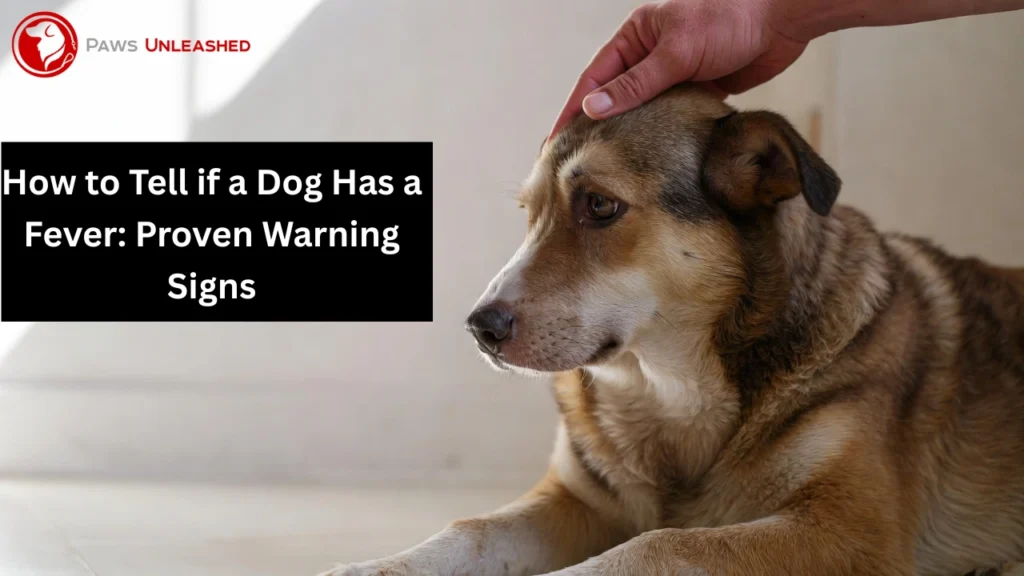
How to Tell If Dog Has a Fever Using a Thermometer
A temperature reading can help the veterinarian, but safe handling comes first. Ask the clinic whether to measure at home or bring the dog in.
Best Way to Take a Dog’s Temperature
A rectal digital thermometer may be used when a veterinarian has shown you a safe technique. Keep it separate from household thermometers. Do not tie down, wrestle with, or force a dog to take a temperature. Stop if the dog resists or you risk a bite, and ask the veterinary team to assess them. Follow your veterinarian’s handling and thermometer instructions. Do not use a universal insertion depth for every dog or keep trying when the dog is distressed.
Interpreting the Results
Tell the clinic the exact reading, how it was taken, and what the dog was doing beforehand. Seek advice about an abnormal reading with illness signs. A number between 103°F and 104°F does not, by itself, establish a safe watch-and-wait plan. Severe weakness, collapse, seizures, or breathing difficulty needs emergency care regardless of the temperature.
What to Do If You Think Your Dog Has a Fever
While arranging care, reduce exertion and keep the dog in a comfortable, quiet place.
Immediate Care at Home
Offer fresh water if the dog can drink normally, but do not force fluids into the mouth. Ask the veterinarian about cooling if overheating is suspected. Do not improvise fever treatment or delay transport to try home measures.
What You Should Never Do
Do not give ibuprofen, acetaminophen, aspirin, or another human medicine unless a veterinarian specifically directs it. An unsuitable drug or dose can seriously harm a dog. Do not wait 24 hours merely because a fever may be temporary. Symptoms, temperature, and the dog’s health determine the urgency.
When to Call the Vet or Seek Emergency Care
Contact the clinic promptly when the dog seems unwell or a reading is abnormal.
Signs You Should Not Ignore
A reading above 104°F needs prompt veterinary advice. Give the clinic the symptoms too. Go for emergency care for collapse, seizures, breathing difficulty, or severe worsening symptoms; do not wait for another measurement. Repeated vomiting, marked pain, severe lethargy, or inability to drink also needs prompt advice.
Can Certain Dogs Be More Prone to Fevers?
Age and existing health conditions can affect the response to illness.
Puppies and Senior Dogs
Puppies, older dogs, and medically vulnerable dogs need an individualized plan. Contact your veterinarian early about changes in appetite, energy, or temperature.
Dogs With Chronic Conditions
Dogs with chronic or recurring illness may need additional monitoring prescribed by their veterinary team.
How to Prevent Fevers in Dogs
- Not every fever can be prevented; keep the dog’s preventive care current.
- Keep recommended veterinary checkups and report new symptoms.
- Up to date vaccination helps to prevent infectious diseases.
- Follow the prescribed parasite-prevention and feeding plan, and keep toxins out of reach.
Final Thoughts
Notice changes, handle the dog safely, and seek advice based on the whole situation. A temperature measurement can help, but cannot identify the cause by itself.
Always follow your instincts in case you are not sure. Dogs depend upon their owners to represent their health, and immediately action can save a life. for more guides visit out blog page.
FAQs About How To Tell If A Dog Has A Fever
How to tell if my dog has a fever without touching them?
Can a dog’s nose tell you if they have a fever?
How often should I check my dog’s temperature?
Can stress cause fever in dogs?
Training, behavior, and boarding support across the Treasure Coast and beyond
Need practical support with the next step?
Medical concerns belong with your veterinarian. For training, behavior, boarding, and everyday routines, Paws Unleashed USA serves owners across the Treasure Coast, Space Coast, and Palm Beaches from its Fort Pierce home base.
Explore our dog training programs or view the complete service area.