
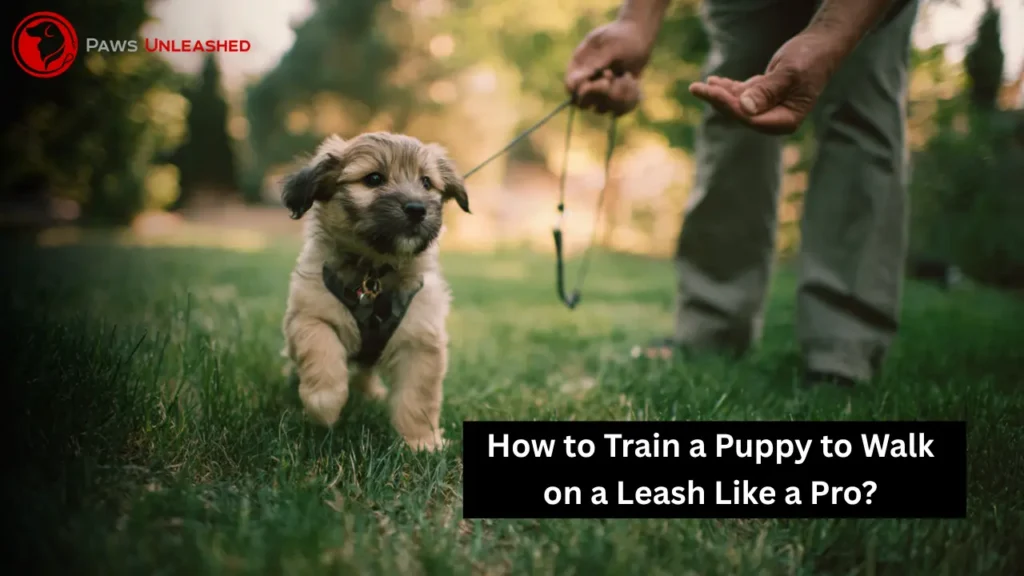
How to Train a Puppy to Walk on a Leash Like a Pro?
Proper training of your dog will build a good life of obedience and one of the most important skills to begin with is being able to learn how to train a puppy to walk on a leash. Lots of first time owners believe that walking can be instinctive, yet in the case of a puppy, being on a leash may initially seem hissing, enslaver or even frightening.
The fine news is that, given time, practice and appropriate technique, your puppy can learn to walk next to you in a relaxed way within a short time. This guide will step you through how to train your puppy to walk on a leash through time-tested, reward-based, steps that not only work but also helps reinforce your relationship with your given pet.
If you want an expert help then PawUnleashedUSA in Fort Pierce, Florida is the best option as they also provide free evaluation. Click on the Evaluation to get your free evaluation.
Table of Contents
Why Leash Training Your Puppy Is Important
Safety and Control in Real-World Environments
A well trained puppy that has been put on a leash is much less likely to get into the traffic, run around and lose track. Leash can be described as a form of communication whether on a busy street or in a serene park that ensures the safety of your puppy and control.
Building Discipline and Good Habits Early
The puppy is an apt learner and early training will eliminate bad habits such as pulling, lunging or zig- zag walking during walks. Instances of proper leash behavior should be taught early on before it becomes too late to correct what they have done.
Strengthening the Human–Dog Bond
Not only is it about control; it is about communication, which is leash training. Once your puppy can trust you and can respond to your instructions and signs, it establishes trust and forms a closer bond between you both emotionally.
When Should You Start Leash Training a Puppy?
The Ideal Age to Begin
The majority of professionals suggest starting leash training when a child is 12-18 weeks old. At this age, puppies are naturally inquisitive and receptive to acquiring new experiences. At an early age, they can adapt to the leash as it is their normal.
Setting Realistic Expectations
This is because puppies have short attention spans. You might not have the ideal walking behaviour in the beginning. Rather, consider small wins and improvement with time.
Essential Equipment for Leash Training
Choosing Between a Collar and a Harness
Harness is also a preferable choice mostly with the beginners. Harnesses are also supportive in relieving weight all over the body, unlike collars, and they minimize the chances of neck injury. This can come in handy especially when your puppy pulls.
Selecting the Right Leash
An ordinary leash (that is 4-6 feet long) will provide you with a reasonable amount of control and still provide your puppy with room to wander. During training, retractable leashes cannot be the best as they promote pulling and diminish consistency.
Using Rewards to Reinforce Behavior
The essence of successful training is positive reinforcement. It should be in small, soft, treats, as it is easy to take them. Praise, toys, or even letting your puppy sniff could be used as a form of a reward as well.
Step-by-Step Guide: How to Train a Puppy to Walk on a Leash
Step 1 – Introducing the Collar or Harness
Make sure your puppy becomes accustomed to that high-collar or harness, before even adding a leash. have them wear it at home when they are doing some playing or having a meal. This assists in establishing a good rapport instead of opposition.
Step 2 – Getting Your Puppy Used to the Leash
After your puppy has become familiar with the harness can attach the leash and drag it around under supervision. This will eliminate the fear and make them get used to that feeling without being pressured by you.
Step 3 – Teaching Your Puppy to Follow You
Start now advising your puppy. Use treats or a cheerful voice to hold the leash and to induce them to use you. Whenever your puppy walks with you voluntarily, reward him right away to make him repeat this act.
Step 4 – Practicing Indoors First
Begin to walk in a low distraction place such as your living room. Make a couple of steps and praise your puppy to keep close. Practice in an indoor environment develops confidence and prepares the environment prior to outdoor practice.
Step 5 – Transitioning to Outdoor Walks
As soon as your puppy feels at ease at home, start training outside somewhere secluded like in your yard. The external world is quite distracting, thus make sessions as brief as possible and progressively open new environments as the time goes by.
Step 6 – Reinforcing Loose-Leash Walking
The end result is to make your puppy learn to walk without pulling. Whenever the leash is loose, reward your puppy. When they begin tugging, walk no more. Wait till they are by your side, and then keep on. This teaches them that drawing will never move them in the right direction.
How to Train Your Puppy to Walk on a Leash Without Pulling
Understanding Why Puppies Pull
Pulling is instinctive as the puppies are interested in exploring everything in their surroundings. They follow odors, noises and motions without knowing leash pressure.
Teaching That Pulling Stops Progress
Among the most efficient is to cease moving when your puppy pulls. Wait patiently. When leash gets loose once again, resume walking. Gradually your puppy becomes then shown to know that the only way to move is to stay near.
Rewarding Focus and Attention
Make your puppy listen to you when you walk. Address them by name, look at them and praise them to remain attentive. This lessens distractions and enhances generally better behavior on the leash.
Common Leash Training Problems and Solutions
When a Puppy Refuses to Walk
Some puppies may freeze or sit down when first introduced to a leash. This is normally as a result of fear or confusion. Rather than tugging them, make them move with the help of presents and a soft voice. Practice confidence, make the sessions brief and positive.
Dealing with Constant Pulling
Consistency is crucial if your puppy is problematically pulling. Everytime they draw, cease to walk. Never surrender but instead reinforce the behavior by making a few steps forward as you pull.
Handling Distractions Outdoors
A small dog, that is only a puppy, can get lost in the external environment. Begin training in an unstimulating environment and increase distractions as your puppy gets better. This is an important stage that must be given time.
When Puppies Bite the Leash
Leash biting is also widespread particularly in the process of teeting. Rather than responding negatively, they should be redirected to a toy or a treat. Praise sensible behavior in order to perpetrate the proper behavior.
How Long Does It Take to Train a Puppy to Walk on a Leash?
Realistic Training Timeline
It takes two -four weeks of training to see the basics in most puppies. Nevertheless, it may take several months to master the art of leash walking based on the environment and personality of the puppy.
Factors That Affect Training Speed
This consistency has a key influence on the speed at which your puppy learns. Sanctification: When training occurs on a daily basis with definite instructions, it is more likely that the puppy will advance rather quickly than the one that is being trained randomly.
Pro Tips for Faster Leash Training Success
Keeping Sessions Short and Effective
Brief concentrated training is much more productive than the training. Pups are easily bored and therefore, short sessions keep them active.
Maintaining Daily Consistency
Being able to use the same commands, routine, and rewards each day make your puppy know what is expected of them. Confusion can be created through inconsistency and hamper progress.
Ending Training on a Positive Note
Always complete an hour successfully, even with a little thing. This gives your puppy a good feel and excited to have the next session.
Avoiding Harsh Corrections
Raucous coercion or punishment may instill fear and destroy trust. Positive reinforcement is more effective as well as enhances your connection with your puppy.
Indoor vs Outdoor Leash Training
Why Indoor Training Matters
Indoor training offers an opportunity to train your puppy in a controlled setting that does not distract it. This simplifies their learning of simple commands and how to behave on a leash.
Gradual Transition to Outdoor Environments
When your puppy feels at home, gradually expose him to the outdoors. Begin with the easy spaces and become more difficult progressively in order to develop confidence and trust.
Advanced Leash Training Skills
Teaching a Consistent Heel Position
You may also start teaching your puppy on how to be steady by its side even when walking. This is particularly handy in such busy or crowded places.
Navigating Busy Environments
Your puppy can also be trained to remain calm in highly distracting locations such as parks or streets, with practice. Slow exposure is the stepping to success.
Reducing Dependence on Treats
In the long run, it is possible to decrease the number of treats and substitute them with praise or some rewards here and there. This aids in maintaining behavior without continuous reinforcement.
Mistakes to Avoid When Training a Puppy on a Leash
Expecting Immediate Results
It is time consuming to train a leash. Being overly optimistic that you can achieve perfection in a short time may cause frustration to yourself and your puppy.
Starting in Highly Distracting Areas
Having your puppy start to train in crowded places can flood your puppy and can delay the process.
Inconsistent Training Methods
The switching of commands or rules often makes your puppy confused and a harder learner.
Skipping Positive Reinforcement
It is important to reward-based training. You cannot provide your puppy with any definite reason to listen to you without it.
Conclusion
The ability of how to train a puppy to walk on a leash is step by step, but most satisfying. Patience, consistency and a positive attitude will get your puppy to walk calmly and confidently by your side.
All puppies learn differently, and thus do not stress on perfection but steady improvement. After daily practice and reinforcement, you will soon be able to go on walks without stress and feel a connection with your pet.
FAQs
How do I train a puppy to walk on a leash for the first time?
Begin with a domestic setting (harness and leash), and then make your puppy follow you with the help of treats and reinforcement.
Why won’t my puppy walk on a leash?
This typically occurs with fear or being unfamiliar. Gradual exposure and rewards help build confidence.
How do I stop my puppy from pulling on the leash?
Whenever your puppy pulls you should stop, and you should only resume walking when the leash is loose.
Should I use a harness or collar for leash training?
Harness, however, is more secure and efficient, particularly when it applies to young pups.
How long should puppy walks be during training?
Sessions of 5-15 minutes are sufficient but they should be short at first as your puppy builds up stamina and attention.