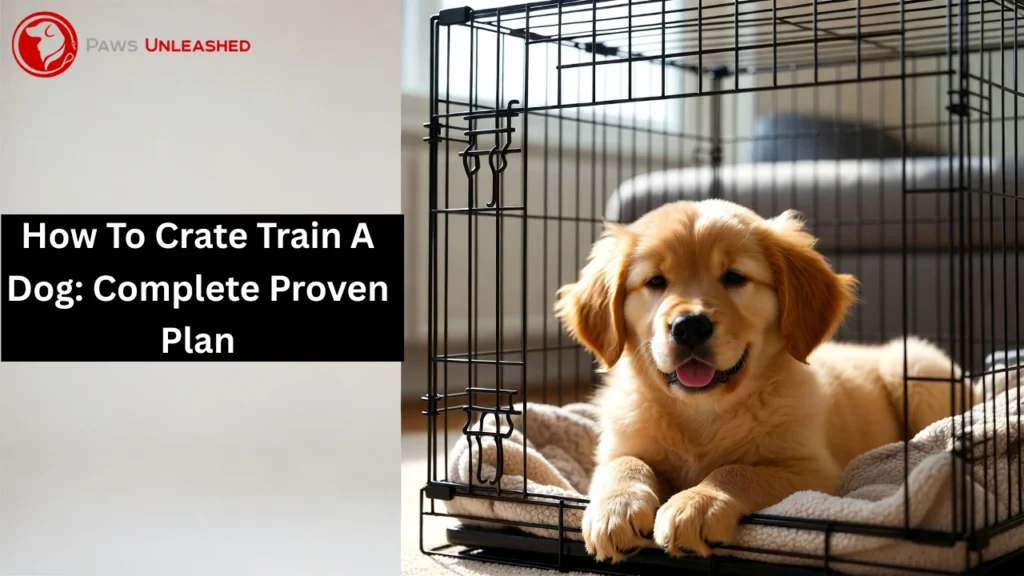
One of the most useful skills you can impart to your dog is crate training. When it is done right as PawsUnleashedUSA does, it provides form, accelerates the training of the house, deters away destructive actions, and leaves your dog with a secure environment to rest. Nonetheless, the process is misunderstood by numerous owners, who hurry or apply it improperly.
Whether you have a young puppy, an adopted rescue, or an adult dog that has never been in a crate, this ultimately full guide will teach you everything on how to crate train a dog, to be on a leash in a crate. By the end you will know not only how to introduce the crate, but also how to use it effectively to not only train the potty, night routines, and long-term behavior management.
Table of Contents
Understanding Crate Training and Why It Works
Understanding the reason why crate training is effective is important before learning how to crate train a dog.
The instinct of dogs is to seek small but enclosed areas where they can feel secure. In the wild, the canines sleep in dens due to the safety and comfort enclosed environments offer. A crate simulates this type of instinctual need when presented in the correct way.
Crate training is not confinement. It is teaching your dog that the crate is a secure, soothing resting area. When used correctly, it can:
- Avoid accidents in house training.
- Minimize chewing and destructive behavior.
- Offer a safe space in times of stress.
- Help dogs when home alone.
- Assist vacation and medical appointments.
The greatest error that owners commit is to use the crate as a penalty. When a dog links the crate with anger or isolation, it is much more difficult to train. Positive reinforcement and gradual exposure are the keys to effective crate training.
Choosing the Right Crate for Your Dog
The initial process in how to crate train a dog is to choose the right crate.
Crate Size and Fit
Your dog also needs to be capable of standing up without bending down, turning around effortlessly and lying down in a full length position. When the crate is too big, then your dog can use one side as a bathroom to postpone the potty training. When it is too small, it will be constricting and unpleasant.
In the case of puppies, dividable crates are best. As your puppy expands in size you can expand the interior without necessarily buying a new box.
Types of Crates
Wire crates are used due to the availability of ventilation and visibility. Plastic crates are more enclosed and den-like which some dogs like. Newly-trained dogs and transportation: soft-sided crates are suitable with already-trained dogs and for traveling.
Where to Place the Crate
Location is more important than most owners are aware of. Keep the crate in a quiet but social place in your home. Dogs are not loners and ought not to be lonely. When the training is in the initial stages, it is best to keep the crate in the area where the family spends time to make the dog feel safe.
How to Crate Train a Dog Step by Step
At this point we are going to go through the actual process of how to crate train a dog.
Step One: Introduce the Crate Without Pressure
Begin by leaving the crate door open. Let your dog feel about it naturally. Drop a few snacks by the door, then gradually inside. Talk in a calming and supportive voice.
Do not make your dog get into the cage. Forcing entry may instill fear and resistance that can take weeks to overcome.
The objective in this phase is straightforward: interest and ease.
Step Two: Create Positive Associations
As soon as your dog is willing to enter, start feeding in the crate. Initially, place the bowl close to the entrance. Gradually, bring it deeper.
This action creates a good rapport. Your dog is taught that good things occur in the crate. Make sessions not too long, not too bad. The door must be kept open at this stage.
Step Three: Close the Door Briefly
You should keep the door closed (with you being close by of course) only a few minutes when your dog seems relaxed eating and resting indoors. Open it before your dog gets anxious.
Gradually extend the period over a few days. Begin with two minutes, then five, then ten. Never close the door when your dog is calm. This supports slack behavior.
Step Four: Increase Distance and Duration
After your dog can calm down in the crate up to around fifteen to thirty minutes when you are at home, start leaving the room every now and then. Come back silently and do not make a fuss.
The step helps in avoiding linking the crate to separation anxiety. Your dog gets to know that being in the crate does not imply being left behind.
Step Five: Begin Short Absences
Once your dog is able to stay in the crate longer, you can start crating on short outings. Remain departures and arrivals serene. Give a chew toy to relax.
Progress gradually. It is not advisable to hurry over this.

How Long to Crate Train a Dog?
Another issue that is usually raised by the owners is the question as how long to crate train a dog. It depends on the age, temperament and consistency.
When introduced at an early age and training them, puppies usually adapt within a period of one to three weeks. Adult dogs can require two to six weeks. Dogs with a history of anxiety or rescue dogs might take longer.
Regularity is more important than pace. Short sessions daily are better than long sessions, which should be occasional. Dogs love routine and repetition instills confidence.
Keep in mind that crate training is not a competition. There are dogs that adapt within days, others within weeks. Long-term success comes with patience.
How to Crate Train a Rescue Dog
When learning on how to crate train a rescue dog, you should know that their behavior may be affected by their previous experiences.
The rescue dogs might have been improperly confined earlier or they might equate small areas with stress. The establishment of trust is the priority.
Begin gradually as you would with a puppy. Give the dog a few days of freedom in the crate, and only then shut the door. Provide cozy bedding and celebrate the slightest improvement.
Place the crate in a very social place to ensure the dog is not isolated. When your rescue dog is scared, then stand back during the process and not to push.
Rescue dogs are especially sensitive to patience and gentle reinforcement.
How to Crate Train a Dog for Potty Training
Housebreaking is considered to be one of the best applications of crate training. In case you are asking how to crate train a dog for potty training, organization is the key.
It is instinctive in dogs not to soil the sleeping place. This instinct renders the crate a strong house-training aid.
Establish a Strict Potty Schedule
Always be outside with your dog right after waking up, after eating, after playtime, and before going to bed. Consistency trains your dog on where and when to eliminate.
Puppies do not control their bladders well. One rule of thumb is that with each month of age, a puppy is capable of holding their bladder around an hour. As an example, a 3-month-old puppy can wait up to three hours.
Do not push your puppy beyond its capabilities because it causes accidents and disappointments.
Supervision Is Essential
Supervision is essential when your dog is not in the crate. When you are unable to watch over, use the crate in the meantime. This helps to avoid accidents and strengthens routine.
Gradually, your dog comes to understand that elimination outdoors is rewarded with praise.
How to Crate Train a Dog at Night
Nighttime is the most difficult step of crate training. Routine and reassurance are important should you be asking yourself how to crate train a dog at night.
Start with a regular bedtime. Take the last potty break before bed. Play in a relaxed manner but not vigorously.
In the initial phases, keep the crate in your bedroom. Your presence is reassuring and calming. The more confident your dog is, the more gradual you can change the location of the crate to where you would like it to be.
During the early weeks, puppies might require a single nighttime potty break. Be low profile and business oriented. Playtime should be avoided during evening outings.
In case your dog whines, take some time before you act. Nonetheless, when whining persists and feels urgent, make sure to check whether a bathroom break is necessary.
Nighttime confidence is developed by consistency.
Common Challenges During Crate Training
The difficulties can occur even in the process of doing the right things.
Other dogs initially whine during adaptation. This is normal. Make sure they are satisfied, and do not open the door immediately because there is noise. This way would inadvertently reward whining.
When a dog does not want to go inside a crate, repeat previous steps and create good associations once more. It is preferable to dragging feet.
Separation anxiety may be seen in dogs that are very panicked, drool too much, or that are trying to escape. In this situation, it is better to address a professional trainer or veterinarian.
What to Avoid During Crate Training
Some errors may slow down success. The crate should not be used as a punishment. Never force your dog inside. It is advisable not to keep puppies in crates too long. The unwillingness to heed signs of distress may establish long-term fear.
The crate training should be positive and organized at all times.
When to Stop Using the Crate
It is common to find many dogs voluntarily staying in their crate despite having undergone training. Other owners leave the crate door open permanently as a place to rest.
When your dog has become house-trained, is not destructive at all, and does not panic when left unattended, you can start to cut down the time spent in a crate.
To certain dogs, the crate is a permanent safe haven.
Final Thoughts on How to Crate Train a Dog Successfully
The process of how to crate train a dog involves patience, consistency, and knowledge. The crate is not just a management tool when it is introduced correctly it turns out to be a source of security and comfort.
You may be determining how long to crate train a dog, how to crates train a rescue dog, how to crates train a dog to potty train, or how to crates train a dog at night, but the rules are the same: use positive reinforcement, take it slow, and make it routine.
Each dog has a different pace of learning. Be patient, celebrate milestones, and do not hurry. Time and repetition will make your dog perceive the crate as a way to sleep and rest, rather than as a form of imprisonment. If you want to learn more about training dog then go to our blog page.
FAQs How To Crate Train A Dog?
How long does it take to crate train a dog?
After regular training, most puppies settle in 1-3 weeks. Adult dogs may take 2–6 weeks. Depending on the prior experience, rescue or anxious dogs may take long.
How long can a dog stay in a crate?
At one month of age, puppies have the capacity to hold their bladder up to one hour. Adult dogs are not to be kept in crates more than 68 hours without interruption.
Is crate training cruel?
No, when done correctly. A safe, comfortable area must be a crate, never used to punish or hold someone long term.
How do I crate train a dog at night?
Establish a bedtime schedule, provide one last potty break, and put the crate beside your bed first. Be insensitive to whining in the short term but sensitive to the need of your dog to go to the restroom.
How do I crate train a dog for potty training?
Have a rigid meal and bathroom schedule. Keep your dog in a crate when you are unable to watch it so that it does not cause accidents and to develop bladder control.